
Choosing the right surface starts with understanding how to select quartz stone for beautiful worktops without compromising durability, maintenance, or fit. The best quartz countertop for your kitchen or utility space should match your cabinet color, withstand daily wear, and suit your lighting, layout, and budget. In the next few minutes, you’ll learn what to check in a slab, which performance details matter most, and how to avoid common mistakes that make a worktop look disappointing after installation.
- Focus on slab appearance, not just the sample, because veining and tone can vary.
- Check thickness, finish, edge options, and stain resistance before you commit.
- Ask for fabrication details, warranty terms, and low-emission certification when needed.
- Compare quartz against your real use case: cooking, family traffic, and lighting.
What should you look for first in a quartz slab?
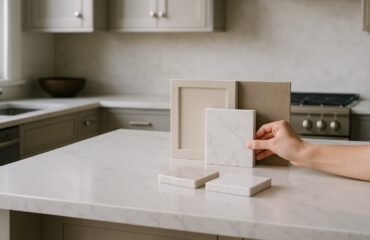
Start with the visual characteristics that will define the room. Quartz stone is engineered from natural quartz crystals and resin, so each collection has its own balance of pattern, movement, and color consistency. Look at a full slab, or at least several large samples, because small chips can hide the real scale of the veining and the way the surface reads across a long island.
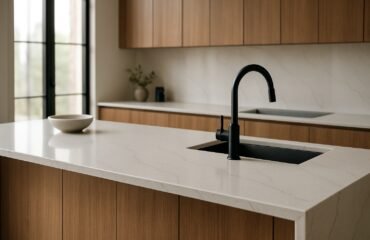
Pay attention to undertones as well as the main color. A white quartz worktop can lean warm, cool, or gray, and that shift affects how it pairs with oak, walnut, painted cabinets, and splashbacks. In bright daylight, subtle differences become more obvious, so view samples in the same room where the countertop will be installed.
Which performance features matter most for a busy kitchen?
Beautiful quartz should also behave well under daily use. For most homeowners, the main advantages are low porosity, easy cleaning, and strong stain resistance. That makes quartz a practical choice for worktops in kitchens, laundry rooms, and family spaces where spills and fingerprints are unavoidable.
Ask your supplier about scratch resistance, heat tolerance, and the recommended cleaning products. Quartz is durable, but it is not indestructible. Hot pans, abrasive pads, and harsh chemicals can damage the resin binders or dull the surface over time.
How do thickness and finish change the final look?
Thickness affects both the visual weight and the installation style. Common options include 20mm and 30mm slabs, and each creates a different profile once edge detailing is added. A thicker worktop can feel more substantial in a large kitchen, while a thinner slab can look cleaner and more contemporary.
Finish also matters. Polished quartz gives a crisp, reflective surface that works well in modern kitchens, while honed or matte finishes create a softer, more architectural look. If your room gets strong natural light, a less reflective finish can reduce glare and make the surface feel calmer.
How do you choose a quartz design that looks expensive, not busy?
The most successful quartz worktops usually support the room rather than dominate it. If your cabinets already have strong grain, colored fronts, or dramatic hardware, a quieter quartz pattern often looks more refined. If the space is simple and minimal, you can use stronger veining or a marble-look design to add movement without sacrificing easy care.
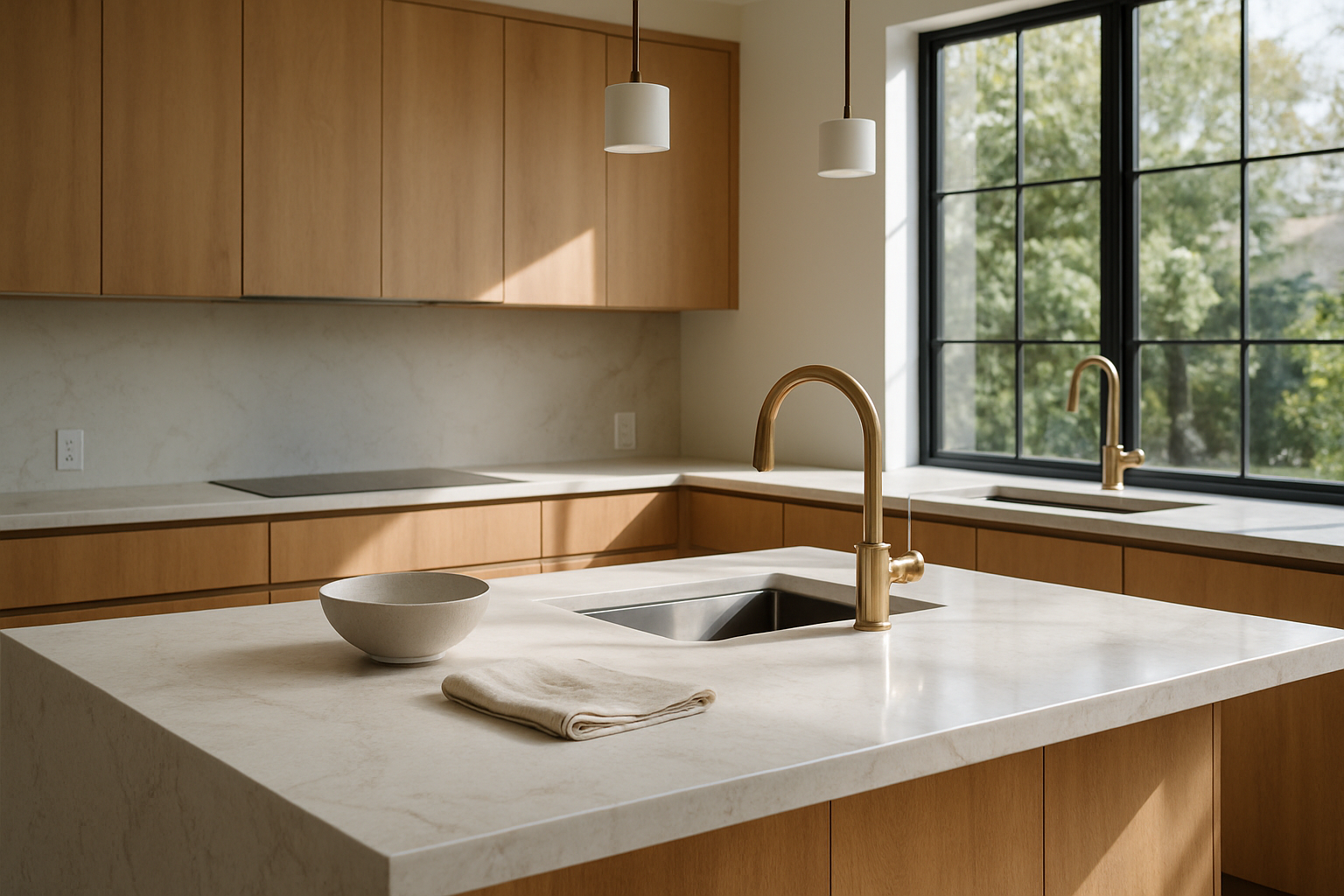
Consider the full composition: cabinet color, flooring, wall paint, tap finish, and backsplash tile. A white-and-gold quartz design can look premium in a warm scheme, while a soft gray or pale taupe slab may be better for cooler interiors. Sample boards are helpful, but full-room mockups or digital renderings are even better for avoiding clashes.
What should you ask before you buy?
Before ordering, confirm the practical details that affect long-term satisfaction. Ask where the slab was manufactured, whether the pattern is consistent across the full sheet, and what joints will be visible in your layout. Also check the warranty, because coverage terms vary by brand and may exclude issues caused by incorrect installation or unsupported overhangs.
If air quality matters in your project, ask for low-emission documentation and check whether the product has third-party certification such as UL GREENGUARD certification criteria. That step is especially useful for enclosed kitchens, renovation projects, and households that want additional reassurance about indoor emissions.
How can you compare options with real-world examples?
Use your daily routine as the test. A family kitchen with frequent cooking and school bags needs a forgiving quartz design with good stain resistance, a forgiving finish, and edge details that won’t chip easily. A showpiece island in an open-plan living space can justify bolder veining, bookmatched placement, or waterfall edges if the room has enough visual breathing space.
Industry experts consistently advise evaluating stone in the exact environment where it will be used, because lighting, adjacent finishes, and slab variation change the final result more than many shoppers expect. That is why the best choice is rarely the prettiest sample alone; it is the slab that still looks right after fabrication, installation, and years of use.
When you are ready to buy, shortlist two or three quartz options, view full slabs in natural light, and ask your fabricator to explain the seam plan, sink cutout, and edge profile before you sign off. That simple process gives you a worktop that looks intentional on day one and still feels easy to live with years later.