

How to Select Quartz Stone for Beautiful Worktops

If you’re researching how to select quartz stone for beautiful worktops, this guide shows how to compare colour, veining, finish, thickness, and supplier quality so you can choose a surface that looks elegant in daylight and performs well in daily use. Quartz is popular because it combines a refined, stone-like appearance with low porosity and easy care, but the best result depends on matching the slab to your room, lighting, and budget. The right choice is less about choosing the prettiest sample and more about selecting a consistent slab, a suitable finish, and a fabricator who understands how the material will be cut, joined, and installed.
Key Takeaways
- Choose the slab in person, under the same lighting your kitchen gets at home.
- Look beyond colour: edge profile, finish, pattern repeat, and slab consistency all affect the final look.
- Ask for written details on thickness, warranty, maintenance, and fabrication standards before ordering.
- Use a qualified fabricator, especially for cutting and installation, to protect both the finish and indoor air safety.
What should you prioritise first when choosing quartz stone?
Start with how you want the worktop to feel in the room. A bright white quartz with subtle speckling suits clean, contemporary kitchens, while soft greys, warm taupes, and marble-look veining can make a space feel calmer and more architectural. If you have bold cabinet colours, a quieter slab usually creates better balance; if the room is simple, a stronger pattern can become the focal point.
Think about practical use at the same time. Quartz is engineered stone made from crushed quartz and resin, so it offers consistent colour and is typically non-porous, which helps with staining and everyday cleaning. That makes it a strong option for busy family kitchens, islands, and open-plan spaces where the worktop is always visible.
Which surface details make quartz worktops look more expensive?
The finish matters as much as the colour. Polished quartz reflects more light and sharpens veining, which works well in compact kitchens or darker rooms. Honed and leathered finishes soften the look, reduce shine, and can make a slab feel more natural, but they may show fingerprints or marks differently depending on the brand.
Pay attention to pattern scale. Fine veining can read as elegant from a distance, but larger flows and dramatic movement may look busier on long islands. Ask to see the full slab rather than a small sample, because quartz pattern repetition is easier to spot when you view the complete surface.
Match the slab to the cabinet and floor undertones
White quartz with blue undertones can clash with warm oak or cream cabinetry. Likewise, beige or greige quartz may look muddy beside very cool white cabinets. Hold samples against cabinet doors, flooring, and splashback materials so you can judge the full palette together.
What technical details separate premium slabs from average ones?
Thickness is one of the first specs to check. Many quartz worktops are supplied in standard thicknesses, and the right choice depends on the look you want, the cabinet structure, and whether you prefer a slim, minimalist edge or a fuller, more substantial profile. A good fabricator can also create the illusion of thickness with mitred edges if you want a heavier appearance without unnecessary weight.
Ask about the warranty, chip resistance, UV performance, and whether the finish is suitable for your room. If your kitchen gets strong sunlight, check how the colour behaves over time, especially for pale whites and darker tones that can show variation more easily. For households that cook often, remember that hot pans, sharp knives, and heavy impacts can still damage any worktop, even one as durable as quartz.
How do you judge a supplier before you buy?
Request two things: a full-size slab viewing and a written specification sheet. A trustworthy supplier should tell you where the quartz is made, what the warranty covers, and how the product should be cleaned and maintained. They should also be clear about lead times, templating, and installation.
Fabrication quality is especially important because quartz dust created during cutting and grinding is hazardous if managed poorly. That is why experienced installers use proper controls and follow safety guidance from authorities such as OSHA’s crystalline silica guidance. Good workmanship affects not only safety, but also seam placement, sink cut-outs, and how seamless the finished worktop appears.
What should you ask before placing the order?
Before you commit, ask to see the exact slab number, not just a colour name. Manufacturing batches can vary in veining, brightness, and movement, so slab approval helps avoid surprises. Confirm whether you need one slab or multiple slabs, especially for large islands or waterfall ends where pattern matching matters.
Also ask how the edges will be finished. A simple straight edge gives a crisp modern look, while a softened pencil edge is easier to live with in family homes. If you want a premium result, check whether the sink, hob, and drainer positions have been planned with enough support and visually balanced joins.
For most homeowners, the best approach is simple: choose a quartz stone that works with your light, your cabinetry, and your daily routine, then insist on a reputable supplier and installer. Take home large samples, view them in daylight and evening light, and compare them against the actual room before you sign off the slab.
- Published in Worktops
How to Choose Quartz Stone for Beautiful Worktops
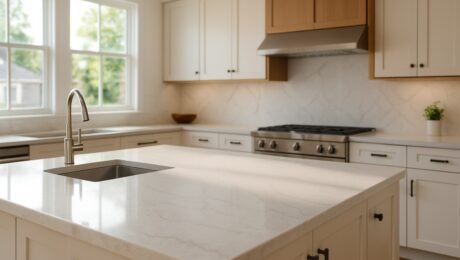
If you are comparing slabs for a kitchen or bathroom, learning how to select quartz stone for beautiful worktops comes down to three things: color that suits the room, a finish that works in daily use, and quality details that hold up after installation. This guide shows you how to judge veining, slab consistency, thickness, edge options, and maintenance so you can choose a quartz surface that looks refined in daylight and stays practical for years.
Key Takeaways
- Start with your room’s lighting, cabinet color, and flooring so the quartz feels integrated rather than isolated.
- Review a full slab, not just a sample, to judge pattern flow, repetition, and overall visual balance.
- Check thickness, finish, edge profile, and fabrication quality before you place the order.
- Ask about maintenance, warranty, and dust-safe cutting practices to protect your investment.
What should you decide before looking at samples?
Before you compare quartz samples, decide what the worktops need to do visually and practically. A busy family kitchen usually benefits from a forgiving pattern and a surface that feels calm next to appliances, splashbacks, and flooring. A showpiece island, on the other hand, may justify stronger veining or a softer, more luxurious finish.
It also helps to think about light. North-facing rooms often make cool whites look even cooler, while warm bulbs can soften grey quartz and bring out beige or greige undertones. Carry cabinet doors, paint chips, and flooring samples with you so the stone is judged in context, not in isolation.
How do color, veining, and finish shape the final look?
The most beautiful quartz worktops usually feel coordinated rather than loud. Fine veining can give a marble-inspired look without dominating the room, while evenly speckled designs create a cleaner, more contemporary surface. Dark quartz can look dramatic, but it works best when the room has enough natural light and lighter elements to stop the space feeling heavy.
Finish matters just as much as color. Polished quartz reflects more light and can look crisp and modern, while a honed or matte finish reads softer and more understated. If you want the worktop to blend in, choose a low-contrast pattern; if you want it to lead the design, use a slab with clearer movement and more visible detail.
Why full-slab viewing matters
Sample chips are useful for comparing color, but they do not show how the pattern behaves across a large island or a long run of cabinets. Because quartz is engineered, the repeat pattern, aggregate size, and resin blend can look different once the design stretches over a full slab. Ask to see the exact batch you will receive and, if possible, place the slab upright so you can judge the movement from a normal standing distance.
A marble-look quartz with soft grey veining may feel elegant on a sample board, yet read busier across an entire kitchen. A more restrained design often looks richer in real homes because it supports the other finishes instead of competing with them.
Which quality details should you check before buying?
Engineered quartz is made from natural quartz particles bound with resin and pigments, so manufacturing quality matters. Look for even color distribution, consistent finish, and a surface that does not show pinholes, cloudy areas, or obvious filler patches. Those issues may not show up in a small sample, but they become noticeable once the worktop is installed under strong task lighting.
Choose the right thickness and edge profile
Quartz is commonly available in 2 cm and 3 cm thicknesses. A thicker slab often feels more substantial and architectural, while a thinner slab can be economical and still look elegant when fabricated well. If you want a chunky appearance without the extra weight, a mitered edge can create that effect cleanly.
Edge profile also changes the style of the room. Rounded edges feel softer and more traditional, while square or eased edges look sharper and more contemporary. Match the edge to the cabinets and hardware so the design feels intentional.
Is quartz practical for real kitchens and bathrooms?
Quartz is popular because it is non-porous, which makes it easier to clean than many porous natural stones. That low porosity is useful around sinks, splash zones, and busy prep areas where spills happen often. For most households, a mild cleaner and a soft cloth are enough for routine care.
It is still smart to treat quartz as a durable surface, not an indestructible one. Use trivets for hot cookware, cutting boards for knives, and gentle cleaners rather than abrasive pads. If you want a surface that looks polished with minimal effort, quartz is a strong choice; if you want a worktop that can take direct heat, that is a different brief.
What should you ask the fabricator before you commit?
The best quartz choice can still disappoint if fabrication is poor. Ask where seams will land, how sink cutouts will be supported, and whether the installer has experience with waterfall ends, integrated splashbacks, or mitred corners. A careful template and precise installation usually matter more than a small difference in shade.
If cutting or polishing is part of the project, choose a shop that treats dust control seriously; OSHA’s crystalline silica guidance for fabrication and cutting is a credible reference point when you ask how the work will be handled. You should also request the care sheet and warranty in writing so you know exactly what is covered after installation.
Which quartz styles suit different rooms?
In compact kitchens, a soft white quartz with delicate movement can help the room feel brighter and more open. In open-plan spaces, a warmer veined design can connect the island to timber flooring, dining furniture, and painted joinery. If the rest of the room already contains strong textures, a quieter quartz slab usually looks more expensive because it creates visual rest.
For bathrooms, subtle stone-look quartz pairs well with mirrors, taps, and vanity units without stealing attention. In family kitchens, lightly speckled or softly textured surfaces often hide crumbs and fingerprints better than very high-contrast patterns, which can keep the room looking tidy between deep cleans.
Before you order, compare the actual slab against your cabinet doors, flooring, and lighting at different times of day. If the quartz still feels balanced in natural light, under warm evening bulbs, and across the full run of counters, you are probably looking at a surface that will stay beautiful long after the installation is finished.
- Published in Worktops